


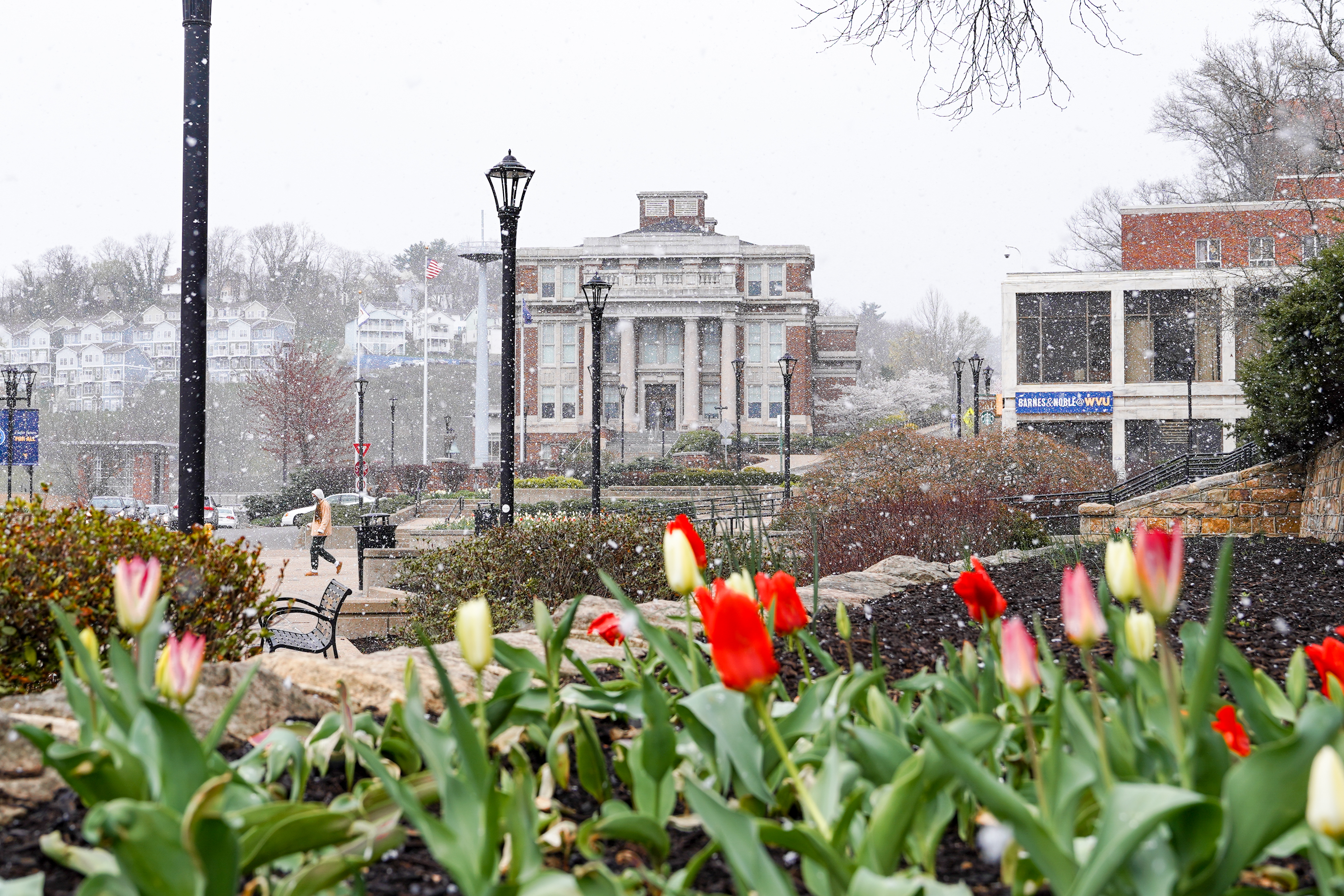
The role of the groundhog in forecasting the seasonal change from winter to spring originates from ancient European customs brought to the United States by German settlers in Pennsylvania, according to a WVU Extension wildlife specialist. (WVU Photo/Kallie Nealis)
A West Virginia University Extension wildlife specialist says Groundhog Day marks an opportunity to celebrate not only the changing of the seasons, but the iconic rodent who decides whether or not to spring Americans from the long months of winter.
Sheldon Owen is available to discuss the roots of Groundhog Day in Pennsylvania’s German immigrant community and to explain what qualities, besides prognostication, make groundhogs special.
Quotes:
“Some call it a groundhog, some call it a woodchuck and some call it a whistle pig, names originating from the animal’s stocky stature and its ‘whistle’ or ‘chuck’ vocalizations.
“Whichever name you use, the groundhog has had an important place in American culture since 1886, when the original Punxsutawney Phil was crowned. The first Groundhog Day celebration was held the following year on Feb. 2, the midpoint between the winter solstice and spring equinox and a significant day in early European festivals and religious celebrations. Germans in Europe used wild animals like badgers and hedgehogs to predict spring weather, and when German immigrants settled in Pennsylvania during the 18th and 19th centuries, they continued the custom, choosing the groundhog as their weather forecaster.
“Believe it or not, there is some biology behind using the groundhog to determine an early spring or prolonged winter. It’s not based on whether a groundhog sees its shadow, but on whether a mate for spring breeding can be found. Male and female groundhogs hibernate in different dens, so a male has to go in search of a female to find a mate for the spring breeding season. If the females are still hibernating when the males emerge from hibernation, then spring will likely be delayed a bit.
“Groundhogs spend their summers building up fat for winter, when they lose about 50% of their body weight during a hibernation that can last three to six months, depending on winter conditions. They have one litter of three to five pups each year, and they’re solitary except when a female is caring for her pups.
“Found throughout West Virginia and across North America along the brushy edges, woodlots and grassy banks of old fields, groundhogs are the largest of the ground squirrels, weighing five to 13 pounds, with short, fully-furred tails. The buffy white tips of their guard-hairs give them a grizzled appearance. They are active during the day and feed on clovers, grasses, agricultural crops, ornamentals, and other woody and herbaceous plants.
“Though groundhogs are most often seen on the ground, they’re actually good climbers. They’re also great diggers, creating different burrows for summer and winter. Their complex underground networks of burrows offer shelter and escape cover not only for groundhogs themselves, but for species including rabbits, skunks, raccoons, foxes, snakes, weasels and chipmunks.” — Sheldon Owen, associate professor and wildlife specialist, WVU Extension
West Virginia University experts can provide commentary, insights and opinions on various news topics. Search for an expert by name, title, area of expertise or college/school/department in the Experts Database at WVUToday.
-WVU-
mm/1/27/26
MEDIA CONTACT: Micaela Morrissette
Director
WVU Research Communications
Micaela.Morrissette@mail.wvu.edu
Call 1-855-WVU-NEWS for the latest West Virginia University news and information from WVUToday.