


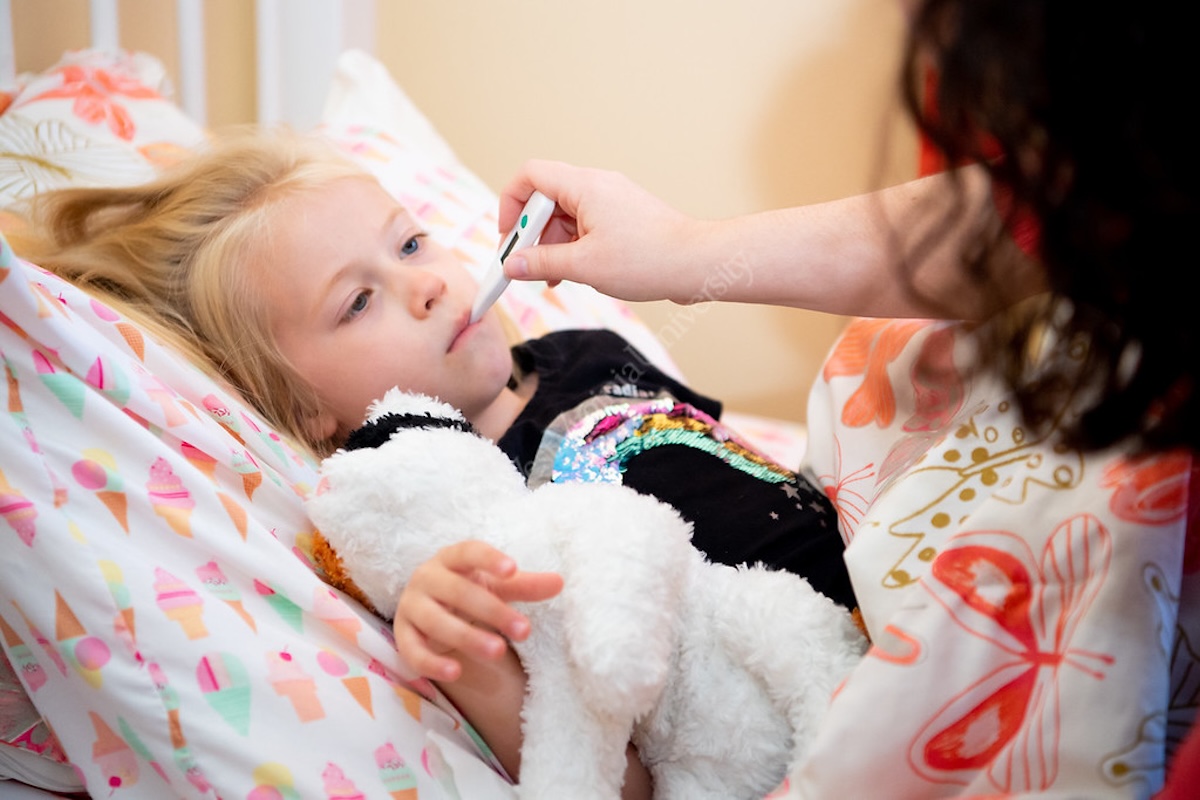
As the number of whooping cough cases continues to rise, WVU physicians are reminding people to be aware of the symptoms and seek medical attention. The infection starts out similar to a common cold and develops into a worsening cough that produces a “whooping” sound when inhaling and causes breathing difficulty. (WVU Photo/Davidson Chan)
Two West Virginia University physicians are encouraging people to recognize the early symptoms of pertussis, or whooping cough, so they can take precautions and seek treatment, when necessary, to avoid further spread of the infection.
Since early November, the number of identified cases of whooping cough in the Mountain State has increased to a magnitude not seen since 2010, as reported by the West Virginia Bureau for Public Health.
Dr. Matt Lokant, assistant professor of infectious diseases, WVU School of Medicine, and WVU Medicine internist, and Dr. Lisa Costello, associate professor of general pediatrics, WVU School of Medicine, and WVU Medicine Golisano Children’s hospitalist, are available to discuss symptoms, risks and preventive measures.
Quotes:
“Whooping cough is caused by the bacteria Bordetella pertussis, which spreads through respiratory droplets when an infected person coughs, sneezes and talks. People in close contact, sharing spaces including houses, apartments, dorm rooms, enclosed areas or classrooms, are at higher risk for spreading whooping cough.
“People at highest risk for the infection and complications are those without prior whooping cough vaccination or an up-to-date booster, those with weakened immune systems, persons who are pregnant and infants less than 12 months old.
“The early symptoms of whooping cough are similar to the common cold: runny nose, mild cough and fever. After one to two weeks, the cough may worsen, causing a ‘whooping’ sound when inhaling and difficulty breathing. Coughing fits can cause vomiting.
“For cold-like symptoms, you should stay home and avoid close contact with others, especially infants. To prevent further spread of respiratory infections, wash your hands often, wear a mask if you have symptoms and need to be in public, and cover your mouth when coughing. It is important to seek medical care if there is any breathing difficulty, violent coughing fits — especially with ‘whooping’ sound or vomiting, suspected exposure to whooping cough or severe dehydration. Dehydration can be seen with dizziness, dry mouth, and not tolerating food and water.” — Dr. Matt Lokant, assistant professor of infectious diseases, WVU School of Medicine, and WVU Health System health care epidemiologist
“Infants tend to be the most severely impacted because their airways are small and their immune systems are still developing. Pertussis can cause intense coughing fits that can interrupt breathing or even cause breathing pauses, or apnea, in infants. This difficulty in breathing can cause lack of oxygen to the brain.
“Complications of pertussis include pneumonia, especially a high risk in infants, seizures, brain inflammation, dehydration, low oxygen levels and, in very severe cases, even death.
“Whooping cough is best treated in the early stages with antibiotics. Preventive antibiotics may be recommended for those who have come in close contact with someone confirmed to have the infection. Drinking fluids and monitoring breathing are also very important. Hospital care, including oxygen support and IV fluids, may be needed for some, particularly for infants or severe cases.
“If left untreated, the infection can eventually resolve, but it may take weeks or months. The coughing fits can last for more than 10 weeks. People who don’t seek treatment are contagious for longer periods. Infants left untreated are at increased risk for complications.
“Staying up to date on immunizations is the safest way to protect against pertussis. Getting vaccinated and treating whooping cough early protects you and vulnerable groups. Pregnant women who get vaccinated can pass the protection to their baby. It’s also important to get health information from trusted sources.” — Dr. Lisa Costello, associate professor of pediatrics, WVU School of Medicine, and WVU Medicine Golisano Children’s hospitalist
West Virginia University experts can provide commentary, insights and opinions on various news topics. Search for an expert by name, title, area of expertise or college/school/department in the Experts Database at WVUToday.
-WVU-
ls/12/17/25
MEDIA CONTACT: Linda Skidmore
Health Research Writer
WVU Health Sciences Center
Linda.Skidmore@hsc.wvu.edu
Call 1-855-WVU-NEWS for the latest West Virginia University news and information from WVUToday.