


A collaborative WVU study is helping state wildlife officials better understand river otter populations, survival rates, and movements across West Virginia. (Submitted Photo/West Virginia River Otter Research Group)
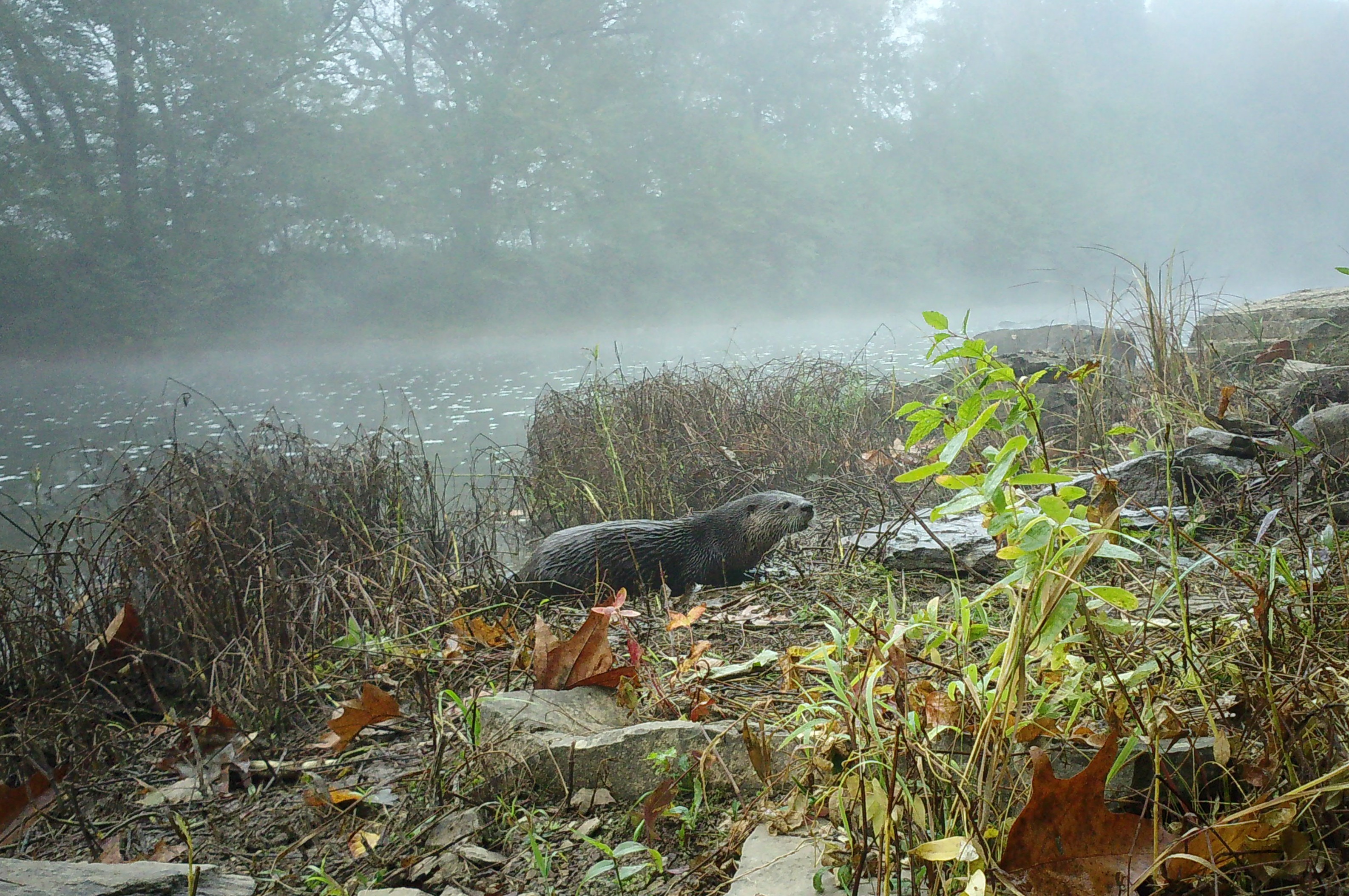
A collaborative West Virginia University study is helping state wildlife officials refine how they manage the Mountain State’s river otter population.
Research conducted with the West Virginia Division of Natural Resources and the U.S. Geological Survey West Virginia Cooperative Fish and Wildlife Research Unit helped inform a decision to increase the annual trapping limit from one river otter to two beginning with the 2027-28 season, bringing West Virginia more closely in line with neighboring states such as Maryland and Virginia.
Laura Gigliotti, adjunct assistant professor in the WVU Davis College of Agriculture and Natural Resources and assistant unit leader with the U.S. Geological Survey West Virginia Cooperative Fish and Wildlife Research Unit, said the research was carried out in collaboration with the West Virginia Division of Natural Resources to gather more information on otter population numbers, survival rates, and where they travel.
Quotes:
“One part of my graduate student’s research was looking at the survival rates of otters and causes of mortality, and then using that data to predict population changes if there was a change in trapping regulations — what would that do to the population?
“We’re using GPS transmitters that no one had really tried on otters before. We’re trying these new backpack transmitters that go between an otter’s shoulders. They don’t stay on for a super long time, but we collected GPS data every 30 minutes and got really fine-scale movement data. Other projects that have focused on otters really haven’t been able to get that scale of data.
“Traditionally, we would use implant transmitters and listen for a signal, but it takes a lot of effort, and you still end up with a pretty small sample size of locations.
“It was almost mind-blowing how much they moved around. My graduate student would show me the data and say, ‘Can you believe this otter went 30 miles in one night?’ It was really cool to see.
“It’s a great example of how on-the-ground research can inform management. Sometimes the work that we do in wildlife biology — it’s hard to see the practical application of it. In this case, WVDNR had a question and a research need, we went out and did the research and that helped inform their management decisions going forward.” — Laura Gigliotti, adjunct assistant professor, WVU Davis College of Agriculture and Natural Resources, and assistant unit leader, U.S. Geological Survey West Virginia Cooperative Fish and Wildlife Research Unit
West Virginia University experts can provide commentary, insights, and opinions on various news topics. Search for an expert by name, title, area of expertise, or college/school/department in the Experts Database at WVUToday.
-WVU-
sg/10/5/26
MEDIA CONTACT: Sam Gorski
Content Strategist
WVU Division for Land-Grant Engagement
sbg0004@mail.wvu.edu
Call 1-855-WVU-NEWS for the latest West Virginia University news and information from WVUToday.