


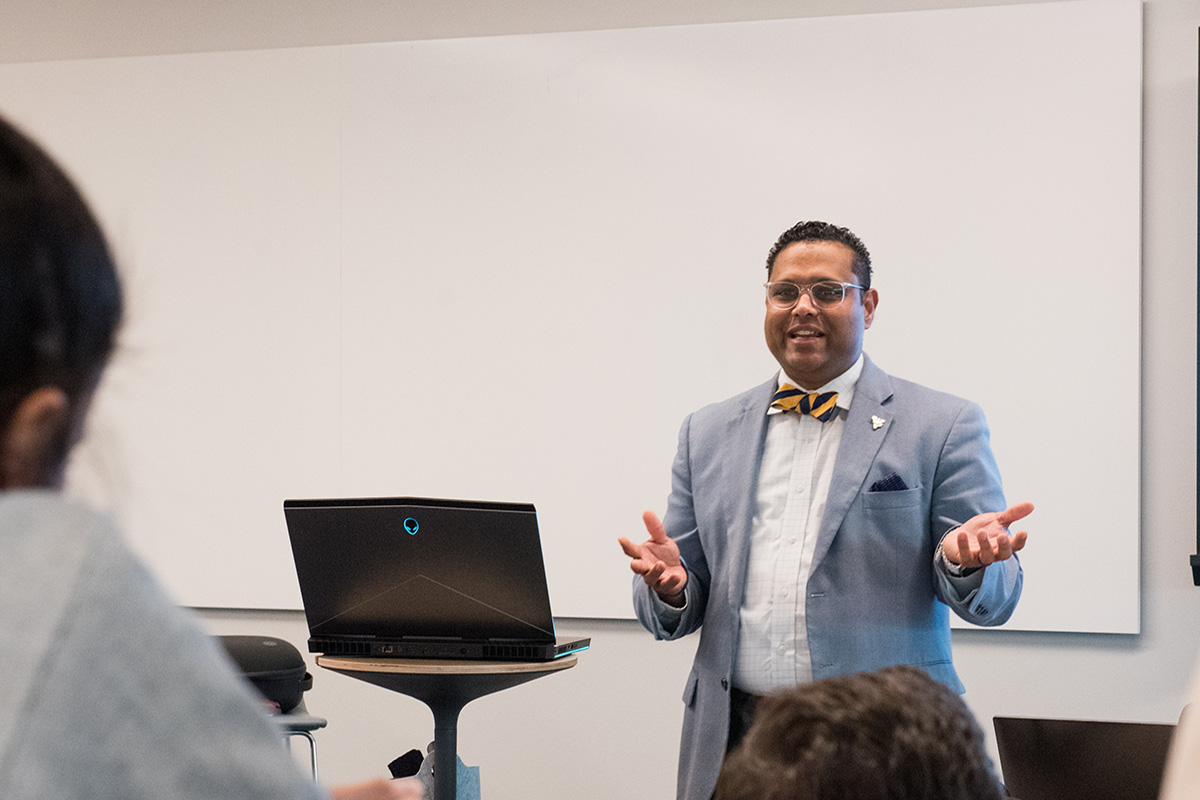
Artificial intelligence is already changing how hotels serve guests, but according to WVU expert Ajay Aluri, human interaction remains at the heart of hospitality. (WVU Photo)
A West Virginia University hospitality and tourism expert says the most memorable hotel experiences still depend on the people behind the desk even as artificial intelligence becomes increasingly common in the hospitality industry.
As vacationing Americans hit the road this summer, many will encounter AI-powered tools from chatbots and digital concierges to automated guest services. Recent studies by Ajay Aluri, associate professor in the WVU John Chambers College of Business and Economics, in the Journal of Hospitality and Tourism Cases and the Journal of Hospitality and Tourism Technology examine how AI is reshaping guest experiences, trust and service delivery in the hospitality industry.
Quotes:
“As a people-centric industry, hospitality should be centered on humans and high-touch service to them. However, travelers’ use of generative AI and technology has evolved, and many hotel guests now want both the flexibility and efficiency provided by high-tech, fully automated AI solutions and the authenticity, empathy and focused engagement of human service.
“Luxury and 5-star hotels continue to focus on personalized high-touch services while upscale and midscale hotels have begun adopting more high-tech, on-demand technologies, such as mobile check-ins and checkouts. Budget and economy lodging, on the other hand, can soon be fully automated with limited staffing.
“AI can handle most routine jobs — housekeeping requests, restaurant reservations and concierge support services, allowing employees to focus on solving problems and delivering guest experiences.
“Research shows that when hospitality and tourism consumers use conversational AI, they appreciate its multilingual capabilities and helpfulness with repetitive tasks. Guests find AI most useful for quick answers about the hotel stay and experiences, but they’re still hesitant to trust its accuracy and wary about how it may be collecting their voice data and personal information.
“Human intervention and intuition are foundational in the hotel industry, but hospitality technology is evolving at a rapid pace. Existing jobs are changing and new jobs are being created. The hotel of the future will offer guests services and experiences that are both high-touch and high-tech.” — Ajay Aluri, associate professor, WVU John Chambers College of Business and Economics
West Virginia University experts can provide commentary, insights and opinions on various news topics. Search for an expert by name, title, area of expertise or college/school/department in the Experts Database at WVUToday.
-WVU-
ks/6/29/26
MEDIA CONTACT: Rachel Brosky
Media Manager
WVU Strategic Communications and Marketing
304-293-3990, RaBrosky@mail.wvu.edu
Call 1-855-WVU-NEWS for the latest West Virginia University news and information from WVUToday.