WVU exercise physiology prepares alum for future in medicine
Gracen Purkey, a WVU exercise physiology alum, used her undergraduate years on the Morgantown Campus to combine classroom learning, research, and clinical experience in preparation for a future in medicine. (WVU Photo/Davidson Chan)
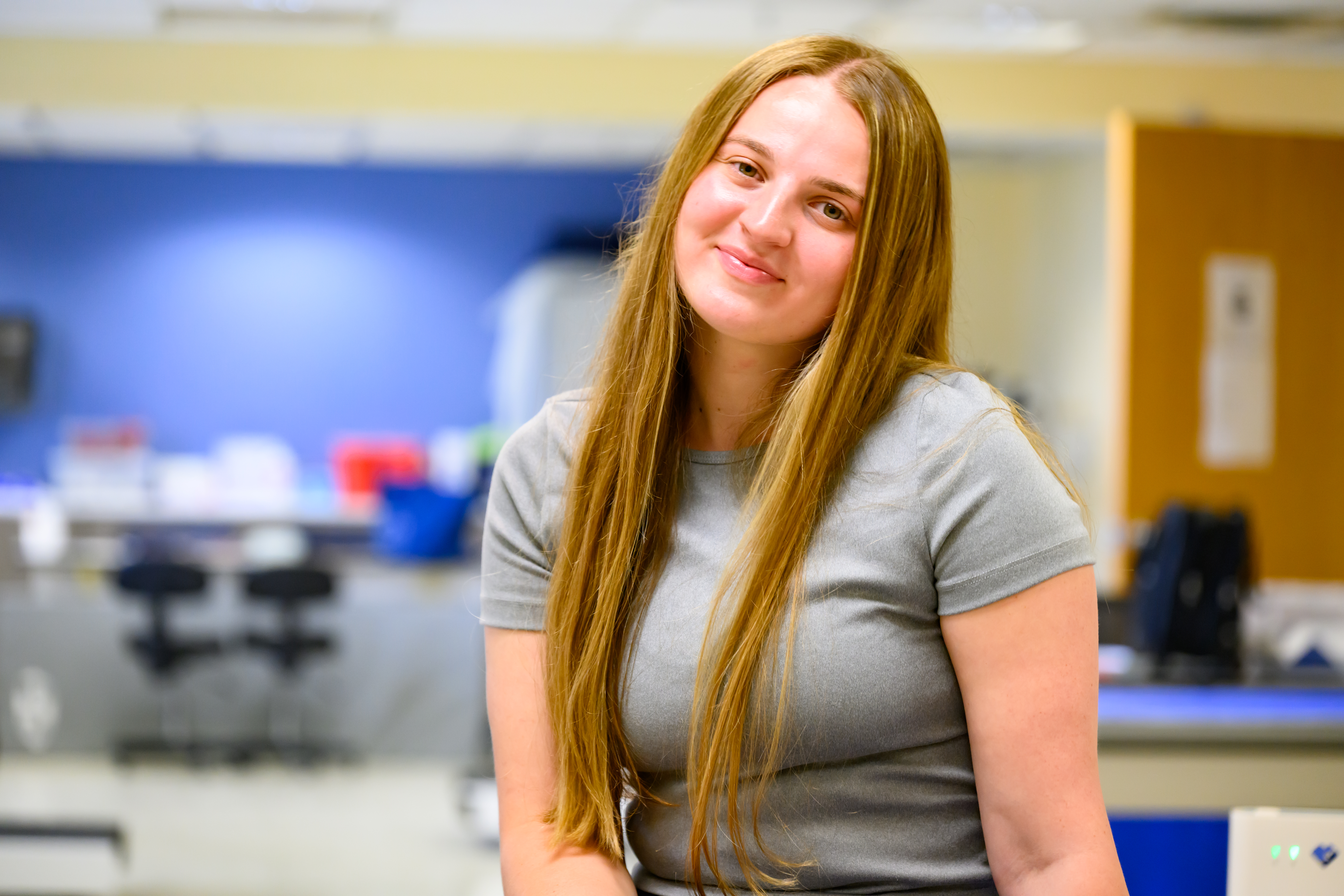
Sometimes things just fall into place. That’s what Gracen Purkey, an alum of the exercise physiology program, says happened when she started planning for college and then continued through her West Virginia University journey.
The Grafton native knew she wanted to study something science-related with medical school on her distant radar and WVU in her more immediate plans. After watching a documentary on exercise testing, her high school counselor suggested a major Purkey didn’t know existed — exercise physiology.
“I knew I didn’t want to major in chemistry or biology, so I signed up for exercise physiology to see if it fit with what I wanted to study, and I loved it,” Purkey said. “I found that a lot of people major in exercise physiology before going on to medical school or dental school, or to become a physician assistant or physical therapist.”
Purkey found another layer of her education come together by applying classroom knowledge to multiple research projects. To lay the foundation for research, she enrolled in cadaver lab as a junior. There, students work with bodies donated to science to gain hands-on learning of the human body functions, adding another layer to what they’ve learned in human anatomy class.
“Cadaver lab gave me the greatest learning experience that’s carried throughout my education,” she said. “We got to see how nerves innervate, or connect to, muscles and other organs, arteries, veins, and bones.”
Even two years after completing the course, Purkey still references what she learned while studying for a comprehensive test.
Purkey gained experience in research and patient care as a research team member working with several faculty members in the WVU Department of Exercise Physiology.
More than clinical learning, the lab gives students a lesson in team building as they work in groups of four to six students guided by a professor and teaching assistant.
“Early in your junior year you still don’t know a lot of your classmates. Then you get put onto this team and you have to make these dissections that are graded,” Purkey said. “You definitely grow together and develop skills in this environment of discovery. It helps you bond with your classmates as well as build a relationship with your professor. It really showed me that professor James Thomas was here to help me.”
Although the lab isn’t required for exercise physiology majors, Purkey said she thinks it helps students make career decisions earlier.
“It helps instill in your learning whether what you’re doing is the right path for you or if you need to change your path.”
For Purkey, it reinforced her certainty of medical school and expanded her research perspective, especially when it came to studying how evaluating the vascular system can play an important role in overall health.
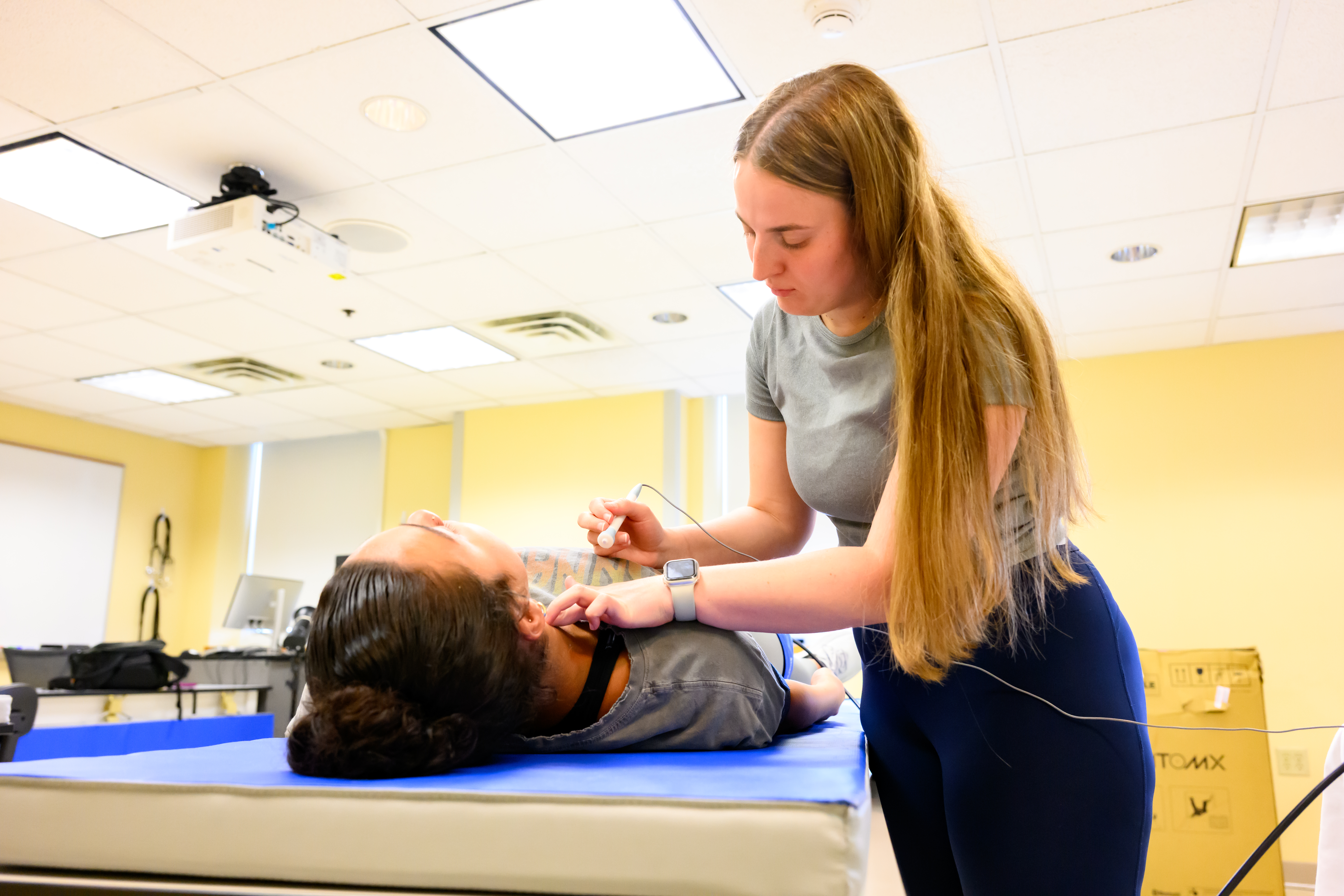
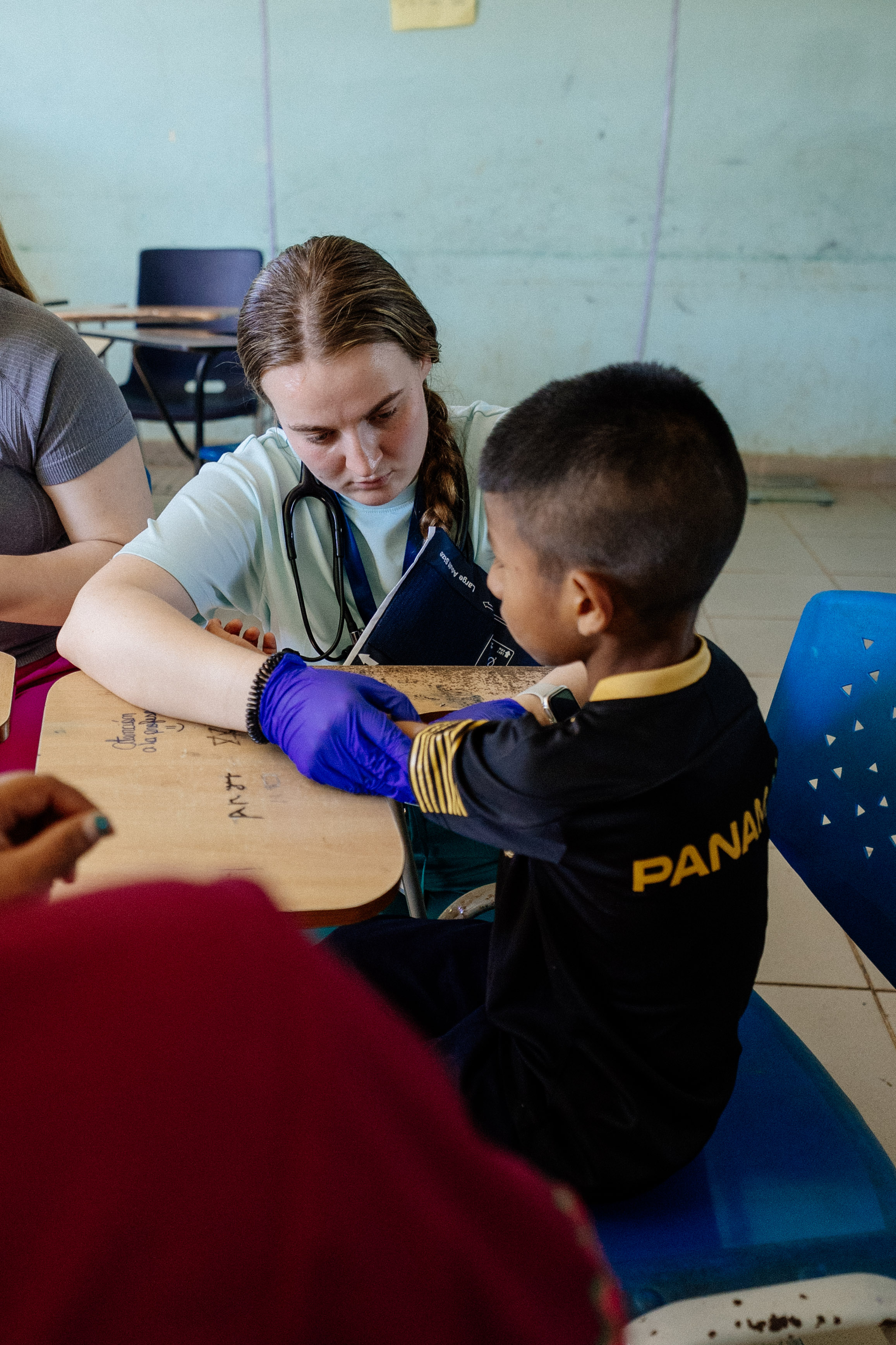
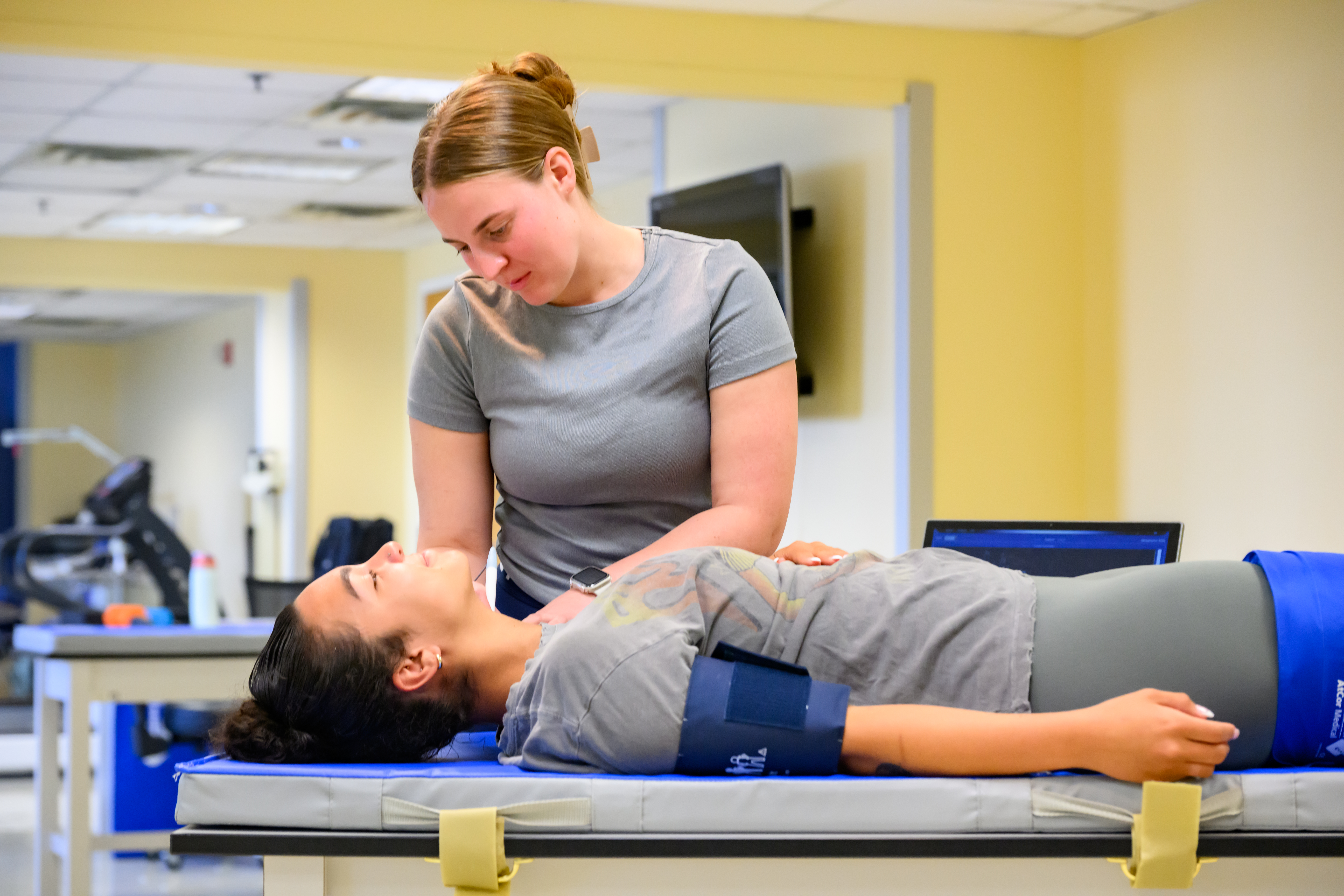
In class, exercise physiology students learn how to take vital signs and perform various health assessments.
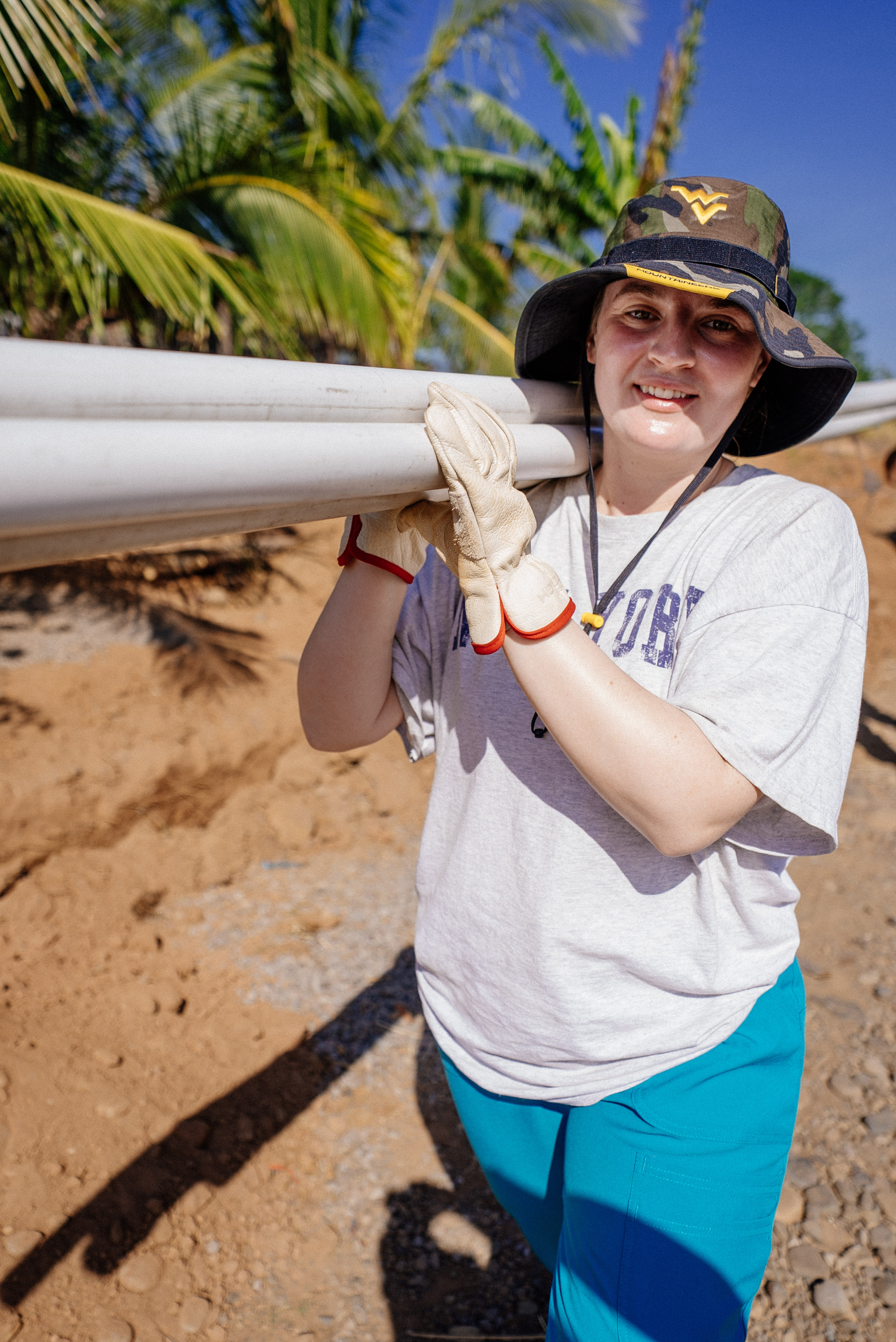
If Purkey had to pick her top interest, it would likely be pulse wave velocity because it became a focus of a few of her research topics. The non-invasive procedure measures arterial stiffness and vascular health and serves as a predictor of cardiovascular disease risk. She’s also taken medical devices on the road to Undergraduate Research Day at the Capitol to offer demonstrations and readings. That added to her experience — and interest — after conducting cardiovascular screenings in rural healthcare settings through the student-run Rural Education Alliance for Community Health program.
Through research, volunteer service, and hands-on clinical experiences, WVU alum Gracen Purkey found opportunities that reinforced her goal of attending medical school after graduating from WVU in May. (WVU Photo/Nika Tabidze)
“It’s an important screening because in our area we have so many people with obesity and diabetes, which contributes to cardiovascular disease,” Purkey said. “A lot of people get plaque buildup in their arteries and don’t know it because this isn’t a common test.
“When you have a buildup of plaque in your arteries, you’re not getting as much blood flow as you should and that causes all kinds of issues, from whether your body isn’t getting the nutrients transported to putting excess stress on your heart, which in the long run can lead to a cardiovascular event. It’s important to get this test so you can make lifestyle changes and prevent problems from progressing.”
Purkey applied that knowledge for her independent research under Miriam Leary, associate professor of exercise physiology. The study examines whether hormonal fluctuations of the menstrual cycle affect vasoconstriction, or the narrowing of blood vessels, and atherosclerosis, a disease that results from the buildup of sticky plaque in the arteries. Both can be determined with pulse wave velocity testing.
“This was an initiative to trigger the need for more women’s health research, especially within the exercise physiology program because, in the long run, they hope to implement a women’s health course,” Purkey said. “It was kind of a pilot project.”
Participants, ages 18 through premenopausal adulthood, were placed in what looks like an inflatable hot tub connected to a pump that regulates the temperature. Researchers tested carotids to determine whether ice baths caused a response to vasoconstriction. The work correlated to another one of Purkey’s exercise physiology classes where she learned about how ice baths affect athletes’ recovery from training.
Purkey learned of the importance of research both as an investigator and as a research subject. She participated in a study examining the effects of cold-water therapy on resting metabolic rate and brown adipose tissue conducted by David Donley, associate professor of exercise physiology, and Randy Bryner, professor of exercise physiology. As a subject, Purkey sat in a cold bath for 30 minutes a day for 30 straight days.
Purkey’s clinical experiences that were part of her undergraduate education cemented her goals for the future and path toward a career in medicine. (WVU Photo/Nika Tabidze)
“This experience showed me a completely different side to research,” she said. “I gained a new outlook on research and now understand the beauty and power of making small sacrifices to ultimately make a difference in the lives of others.”
Some of her other research projects have included pre-screening athletes’ brain health at the WVU Rockefeller Neuroscience Institute and serving as the lead student researcher for a project led by Brian Leary, associate professor in the Department of Exercise Physiology, that involved exercise testing and data analysis of hockey players to implement a conditioning program.
Not everything Purkey learned has come from the classroom or research lab. Job shadowing and volunteering, both required for degree completion, have given her another view of exercise physiology in action.
Sports medicine has been a favorite, particularly one stint with the Pittsburgh Steelers during training camp in Latrobe, Pennsylvania.
“It was a really interesting experience to get to see on-field sports medicine. I worked mainly with the physician, but also with the athletic trainer, physical therapist, and nutritionist. I got to see all different sectors of sports medicine and how they intertwine in a team environment.”
She also got an inside view of sports medicine with WVU Athletics and emergency medicine at J.W. Ruby Memorial Hospital.
From research labs to the J.W. Ruby Memorial Hospital emergency department, Purkey embraced hands-on learning opportunities that helped to shape her future in medicine. (WVU Photo/Davidson Chan)
On the volunteer front, Purkey worked with youths with special needs and taught swim classes to children with cognitive disabilities.
“Exercise physiology works really hard to get us very unique volunteer opportunities because we’re required to have 100 hours to graduate,” she said. “I’ve had some amazing opportunities through the program.”
Purkey also worked as an emergency department technician at J.W. Ruby Memorial Hospital while in school. Although she sought out the position to gain clinical hours she needs to apply to medical school, her exercise physiology studies laid the foundation for the work that’s long piqued her interest.
“What I learned about disease in pathophysiology has helped me so much because it translates over to actually seeing someone with that condition,” she said. “It’s just amazing to see how my classroom education translates over to real-life application.”
Her role as part of the emergency department team encompasses everything from making patients comfortable to taking vital signs and stocking supplies.
“I’ve always been interested in emergency medicine because it’s so fast-paced and you see everything, so it’s given me a grasp of a lot of different medical conditions,” Purkey said. “It’s a great way to learn about healthcare and discover all the different sides of medicine.”
In May, Purkey received her bachelor’s degree, marking four years filled with experiences that made her eager to learn more and prepare her for the possibilitity of medical school.
She doesn’t yet know the exact route of her career choice. What she’s sure of is “it will all fall into place.”
-WVU-