WVU assistant professor helps students build, solve and create with applied AI and data analytics
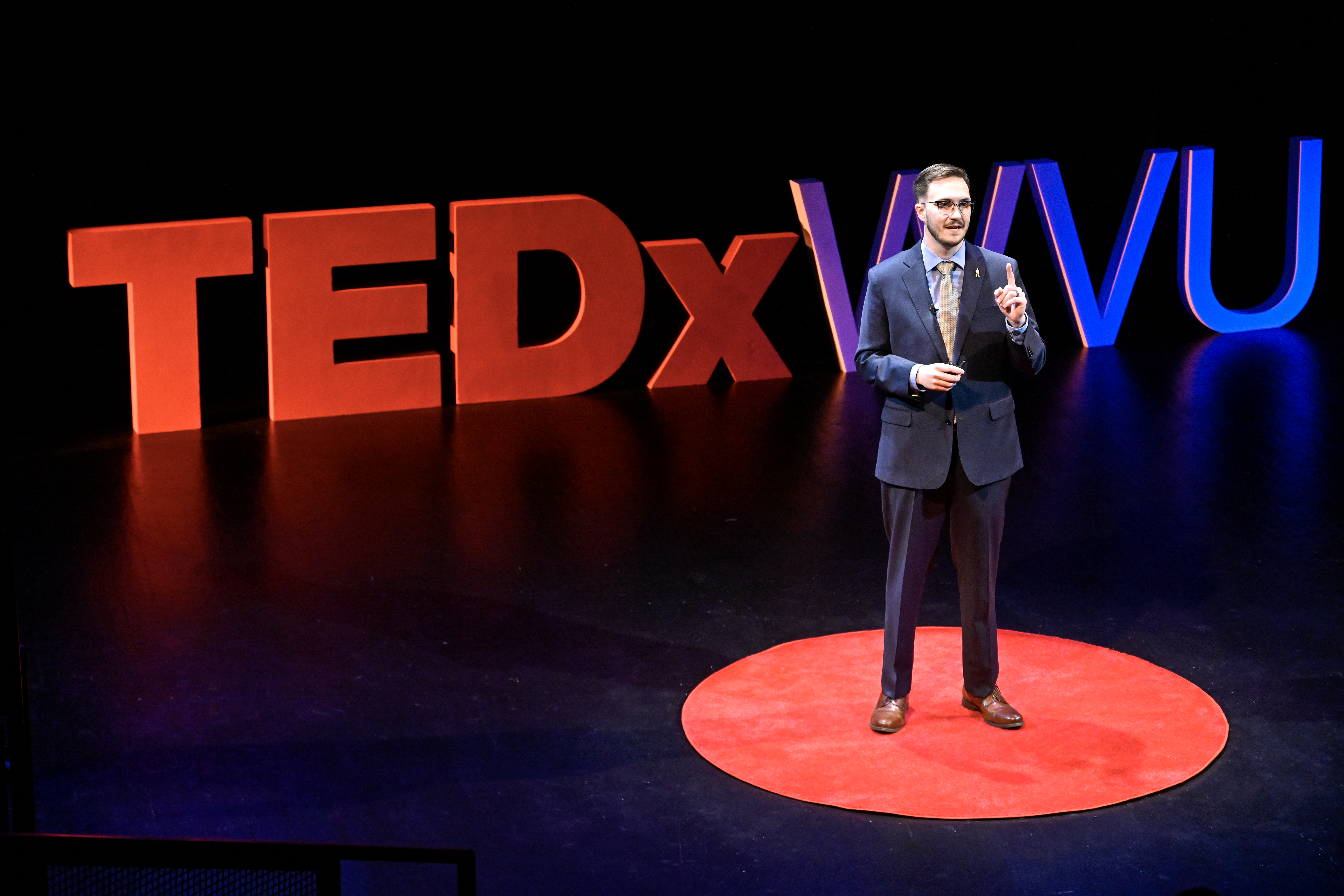
From classroom to stage, Joshua Meadows, service assistant professor and executive director of Data Driven WV in the WVU John Chambers College of Business and Economics, works from the same mission — turning education into opportunity. His work at WVU connects applied AI and data analytics to real-world impact across West Virginia. (WVU Photo/Jennifer Shephard)
What did you do for West Virginia today?
Joshua Meadows, service assistant professor in the West Virginia University John Chambers College of Business and Economics, and executive director of Data Driven WV, asks himself that question, which he originally heard from a mentor, at the end of every day.
It isn’t rhetorical. It’s a personal checkpoint — a way of measuring whether he is living up to his foundational belief that Mountaineers climb higher together than they ever could alone. Over time, it became more than a habit. It became a framework for how he teaches, leads and builds.
That question helps explain Meadows’ involvement in developing then new applied AI and data analytics bachelor’s degree program at WVU.
More than a motivational mantra, it contextualizes his entire path — from first-generation student to educator and program builder — and reveals the throughline behind his work: designing systems that turn education into opportunity, and opportunity into impact for West Virginia.
To understand why the applied AI and data analytics program exists — and why it looks the way it does — you must start much earlier.
From uncertainty to direction
Meadows arrived at WVU as a first-generation college student with curiosity and work ethic, but not a clear plan.
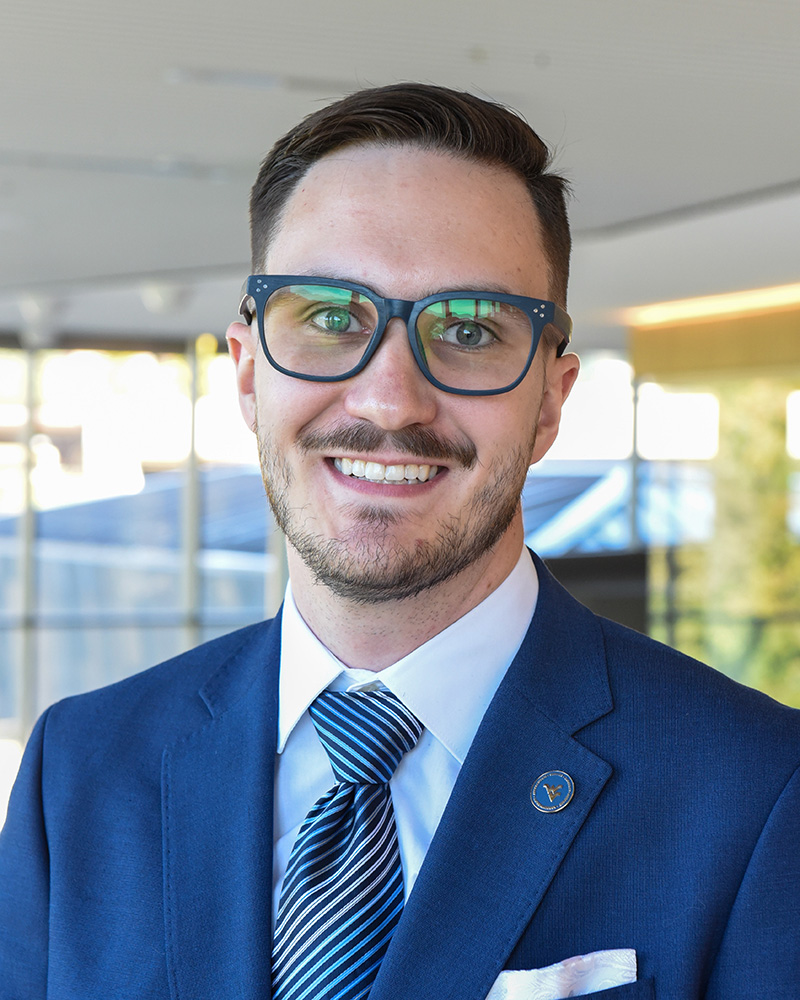
Joshua Meadows, service assistant professor and executive director of Data Driven WV in the WVU John Chambers College of Business and Economics (WVU Photo)
He began in chemistry, shifted to mathematics and completed a bachelor’s degree. A philosophy course sparked a new interest that became a minor — and eventually a second degree. He later earned a master’s in applied mathematics, followed by a master’s in business data analytics.
“I was pursuing things I was good at and interested in,” he said. “But I didn’t initially understand how to translate that into a career.”
That realization — that talent alone is not the same as direction — would eventually define his educational philosophy.
Learning by doing — and leading
Before he ever stepped on campus, his family’s manufacturing business closed. The loss was deeply personal and shaped how he thought about opportunity in West Virginia. He had already seen how fragile small businesses could be, how economic shocks ripple through families and how hard work does not always guarantee stability.
He also experienced impostor syndrome. As a first-generation student navigating advanced quantitative coursework, he often questioned whether he belonged.
Mentors changed that.
“They saw potential in me before I did,” he said.
For Joshua Meadows, teaching starts with trust. In the applied AI and data analytics program, students are given real responsibility — leading projects, advising clients and proving they belong in the work they’re doing. (WVU Photo/Zach Yomboro)

That experience left a mark. If education could open doors, someone had to help students see where those doors were — and give them the confidence to walk through them.
Long before he was designing degree programs, Meadows was traveling the state as a 4-H STEM Ambassador. Under the mentorship of Jennifer Robertson-Honecker, he delivered hands-on STEM programming in rural communities, learning firsthand that students engage most when learning is active.
Later, while pursuing his graduate studies, Meadows served as a graduate assistant on the National Youth Science Day design team. Working alongside Google and 4-H, he helped develop a national computer science experiment kit intended to bring coding concepts to students across the country — including rural classrooms — through accessible, hands-on activities.
The experience reinforced a simple truth: engagement increases when students are building, solving and creating.
That approach became foundational to how Meadows now designs courses.
That foundation deepened during his time with WVU Extension, where he worked under Sue Day-Perroots. During the COVID-19 pandemic, Extension’s services had to be digitized almost overnight. Meadows was given sweeping responsibility — not because of title, but because of trust.
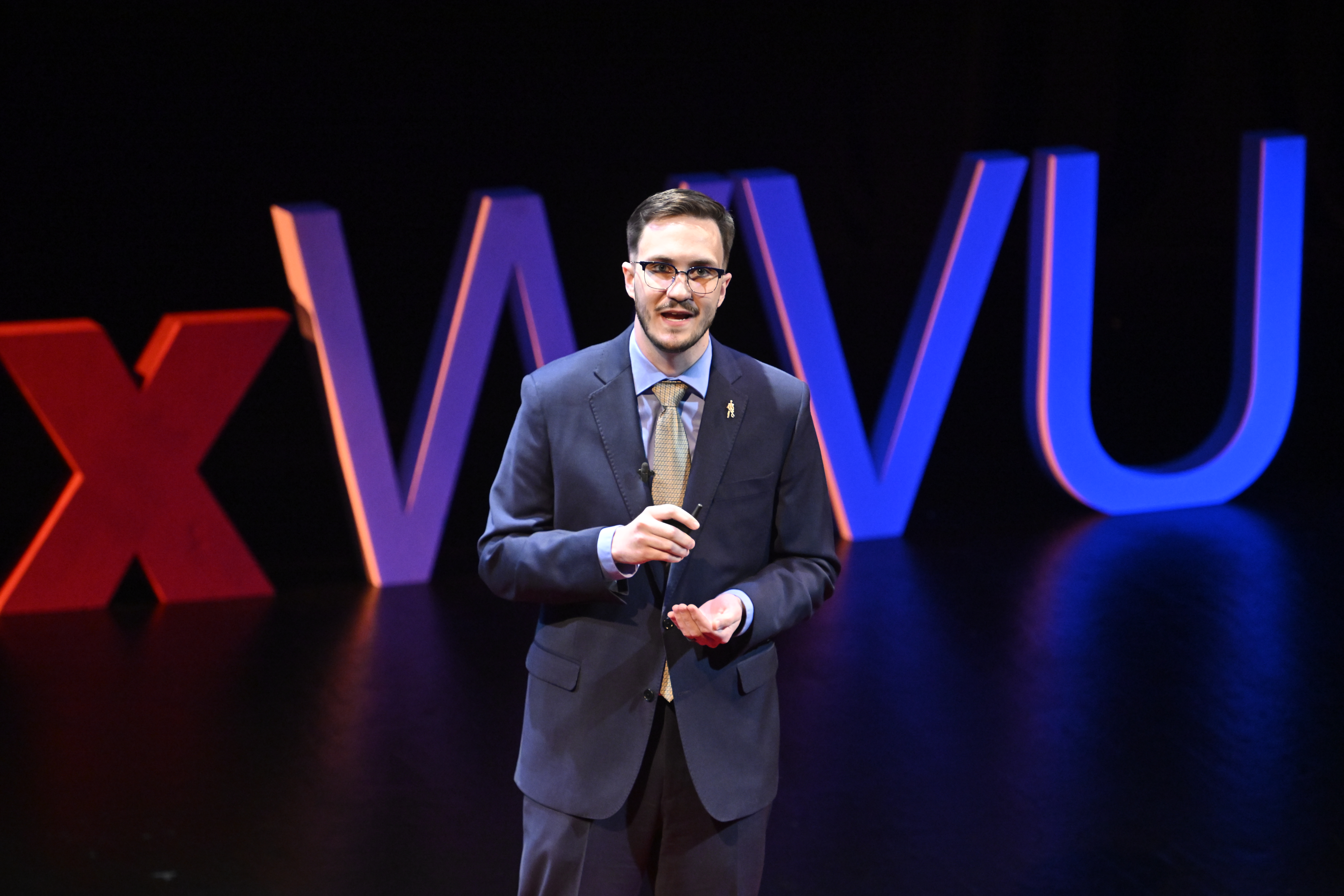
‘What did you do for West Virginia today?’ That question drives Joshua Meadows’ work at WVU — building programs where students gain the skills, experience and confidence to answer it for themselves. (WVU Photo/Jennifer Shephard)
“Sue never asked what my job description was,” he said. “She asked what I could build.”
Her favorite motivational question — What did you do for West Virginia today? — reinforced something he had already begun to believe: students and young professionals rise when they are trusted with real responsibility.
That belief later shaped the fellows model at Data Driven WV, where paid student leaders manage consulting teams serving organizations across the state.
Around the same time, Meadows was being mentored by Brad Price, whose own path — West Virginia native turning quantitative foundations into technology leadership — mirrored many of Meadows’ aspirations. Price helped him think strategically about career development and exposed him to industry expectations, shaping Meadows’ private-sector experience and how he approaches professional work.
Those lessons now show up directly in his classrooms.
Turning education into statewide impact
Data Driven WV was founded by students, with faculty support, around a straightforward idea: many West Virginia organizations need modern data and technology services but cannot afford them. At the same time, students need experience that makes them workforce ready. Data Driven WV brings them together.
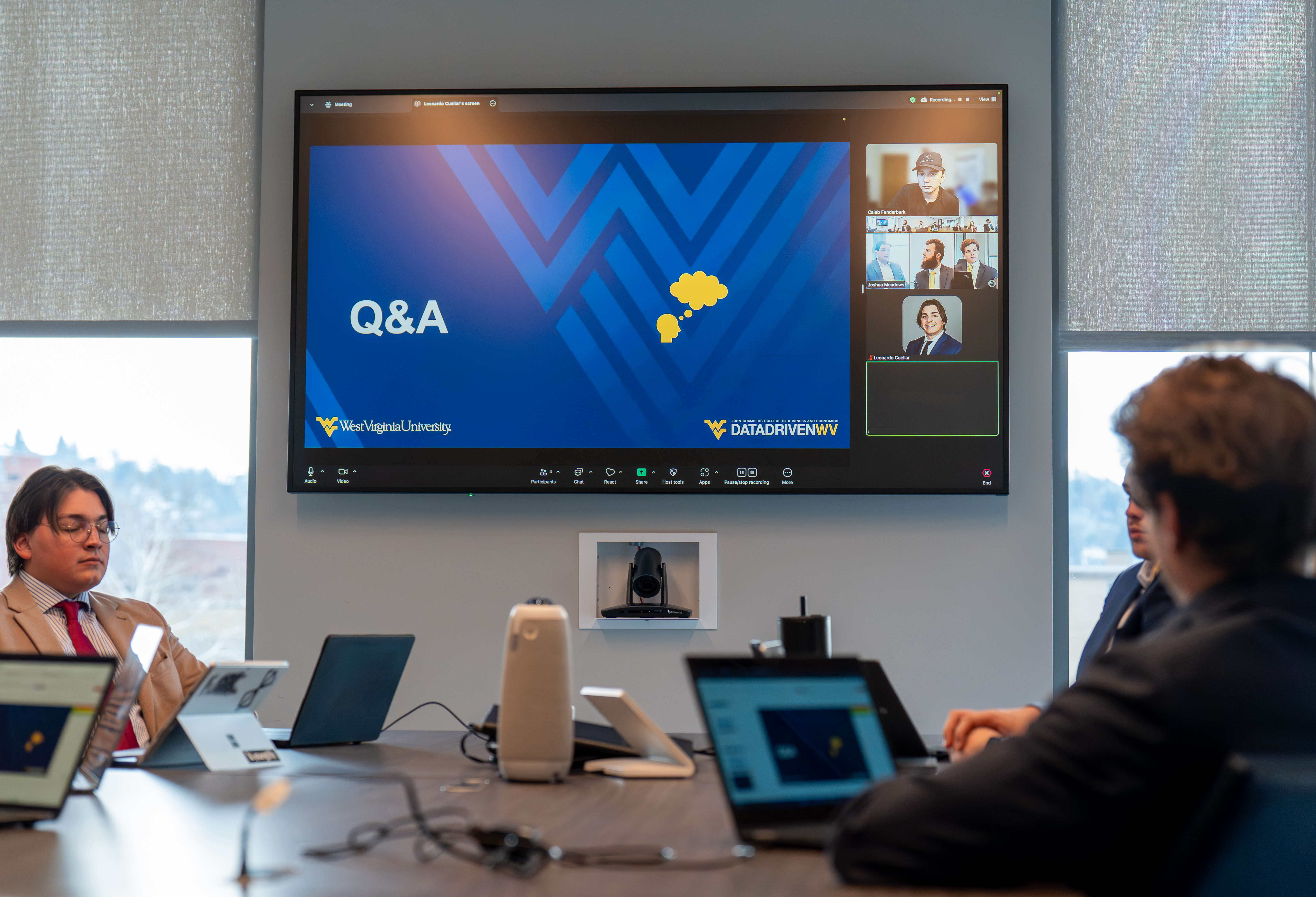
At Data Driven WV, students don’t just learn analytics, they practice it. Mountaineers lead consulting teams, helping businesses and nonprofits across the state solve problems they couldn’t tackle alone. (WVU Photo/Zach Yomboro)
Meadows joined after its creation and helped scale the model into a structured experiential learning engine. What began with a small number of projects evolved into dozens annually, with student Fellows leading consulting teams and peers delivering real solutions to small businesses, nonprofits and community partners across the state.
That growth has been made possible in large part by philanthropic investment, including student leadership programs such as the Lewis Fellowships and the Denton Fellowship. These fellowships place high-performing students on payroll, empower them to lead consulting teams and give them early exposure to professional responsibility — a model directly inspired by the autonomy Meadows experienced in Extension. Meadows and Assistant Director Hannah Bailey also support contract work and employ students as researchers and consultants, building experience that translates directly into the workforce.
Students learn project scoping, stakeholder communication, analytics implementation and professional accountability — skills that translate directly into jobs.
Just as important, many participants are first-generation students or West Virginia natives who once doubted whether they belonged in technical fields. They leave with confidence — and often with job offers that change the trajectory of their families.
For Meadows, that is service.
“I never want anyone else to struggle the way I did,” he said.
The new applied AI and data analytics bachelor’s degree represents a culmination of everything Meadows has learned.
It is workforce-integrated by design. Industry partners helped shape the curriculum. AI is not treated as hype but as a foundational technology that will define modern business operations.
Most importantly, consulting is embedded directly into the curriculum in the courses Meadows teaches.
Applied AI and data analytics students at WVU engage directly with clients and collaborators under the guidance of Joshua Meadows, translating complex questions into actionable solutions for organizations across West Virginia. (WVU Photo/Zach Yomboro)

In BUDA 468, students learn consulting frameworks while working simultaneously on real client projects led by fellows. In BUDA 470, students complete an independent consulting engagement, proving to themselves they are ready to practice.
There is also a deliberate structural requirement: students must complete a minor or second major. AI skills alone are not enough. They must be paired with domain expertise.
“I don’t want students graduating knowing powerful tools but not knowing where to apply them,” Meadows said.
The structure reflects his own academic journey — the realization that technical strength must connect to real-world application.
Meadows describes WVU as one of the best values in higher education — an R1, land-grant institution with deep roots in service. But value is not only about cost. It is about outcome.
He said he wants students leaving WVU with real experience, clear direction and tangible opportunity. He said he wants first-generation students to feel seen. He said he wants those carrying impostor syndrome to find proof that they belong.
Most of all, he said he wants education to translate into meaningful work.
The applied AI and data analytics degree was not created to chase a trend. It was built to solve a problem: how to ensure that education leads to opportunity — for students and for the state.
Meadows often says that changing one student’s life has a multiplier effect. That student strengthens a company. That company strengthens a community. The community strengthens West Virginia.
And so the question remains:
What did you do for West Virginia today?
For Joshua Meadows, the answer increasingly lies in building systems that help others answer it for themselves.
Find more information about applied AI and data analytics at WVU.
-WVU-