Ronalie Abeyratne
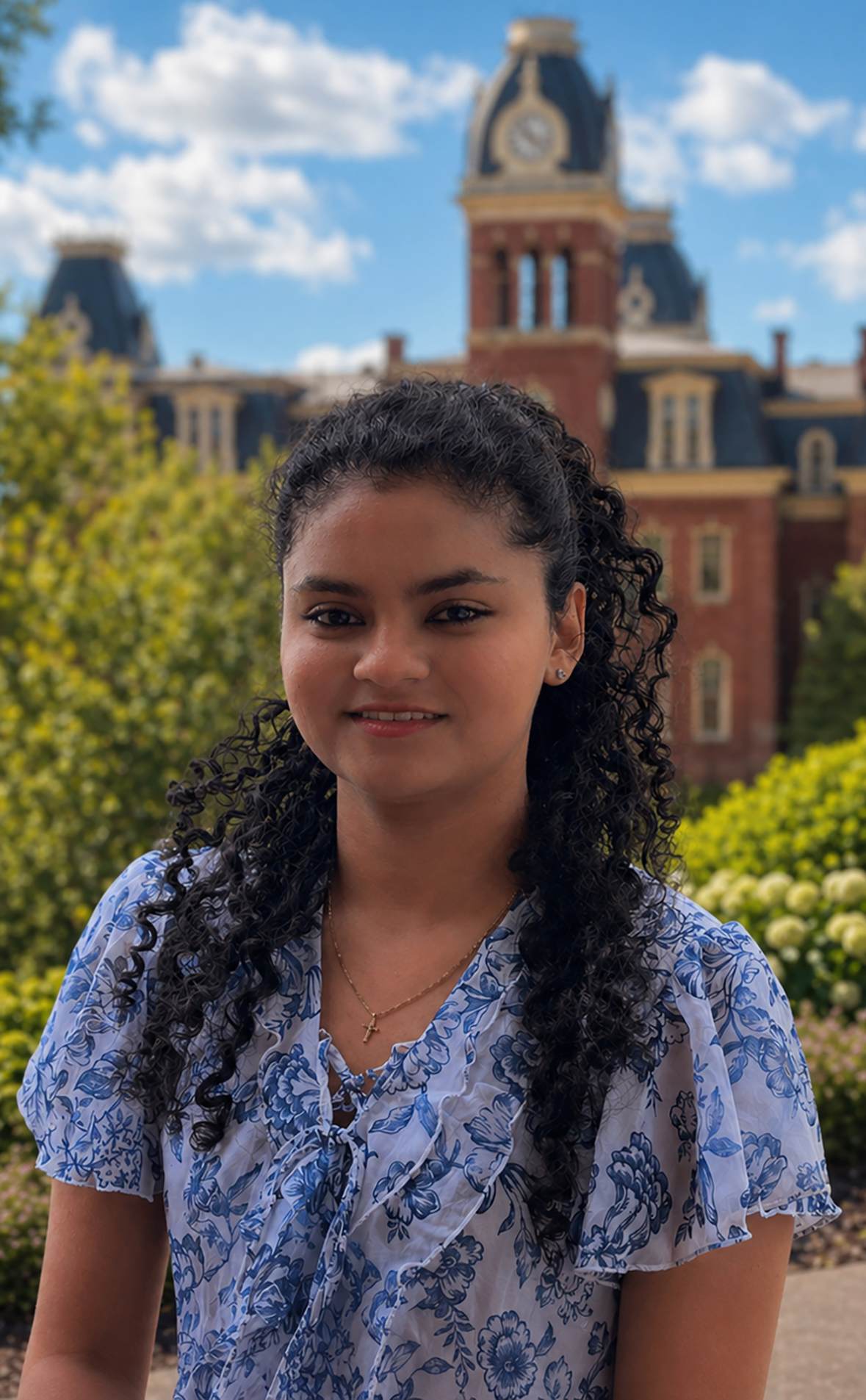
Ronalie Abeyratne, a member of the Honors College from Colombo, Sri Lanka, is graduating with a degree in biology pre-medical and a minor in molecular medicine. As a student in the Eberly College of Arts and Sciences, she dedicated much of her undergraduate career to advancing neurological and ophthalmological research, as well as community leadership and service.
A gold medalist in karate and taekwondo, she served as a Presidential Student Ambassador and the vice chairman of the Morgantown City Council Health and Wellness Commission, where she collaborated with city leadership to promote wellness among local residents. Abeyratne also supported literacy and access to learning resources for incarcerated individuals through the Appalachian Prison Book Project and mentored peers in STEM as a tutor at the testWell Learning Center.
Abeyratne refined her technical communication skills through rigorous research, learning to translate complex data into clear narratives. Selected to participate in the Summer Undergraduate Research Experience in the Department of Neuroscience, she studied methods to better protect the brain after a stroke. Additionally, she worked alongside faculty to study the biological causes of early-onset blindness and potential targeted innovative therapies.
Broadening her research scope as part of the Honors College Foundations progam, she collaborated with faculty from the Davis College of Agriculture and Natural Resources to study the nutritional value of herbal teas through the Research Apprenticeship Program. This project reinforced her belief that careful experimentation is necessary to validate widely accepted ideas regarding nutrition.
She cites presenting her stroke research at the Undergraduate Research Day at the Capitol as her most fulfilling accomplishment. By translating complex biological data for legislators and the public, Abeyratne connected her findings to enhanced health care access and patient outcomes. This experience shifted her view of the scientist’s role, affirming her philosophy that using accessible language is an essential tool in bettering lives and serving her community.
Following graduation, Abeyratne plans to attend the WVU School of Medicine to train as a neurosurgeon-scientist. She aims to combine clinical practice with research to develop innovative therapies for neurological diseases and brain injuries. Beyond her clinical goals, she is committed to increasing representation in medicine by advocating for and mentoring women pursuing surgical careers.